

Let's Talk!
Conversations are a cheat code for campaigns. Why isn't everyone using them?

Cast your mind back to that weird moment in time at the end of 2021. Boris Johnson was still Prime Minister of the UK. The last lockdown had ended only a few months earlier. And Britain had just hosted the COP26 climate summit in Glasgow.
For those of us who follow the world’s stuttering efforts to rise to the challenge of climate breakdown, it was a dispiriting moment, far from the breakthrough we’d hoped for. Amid the disillusionment, all of us wondered: what do we need to do to unlock the political ambition we need?
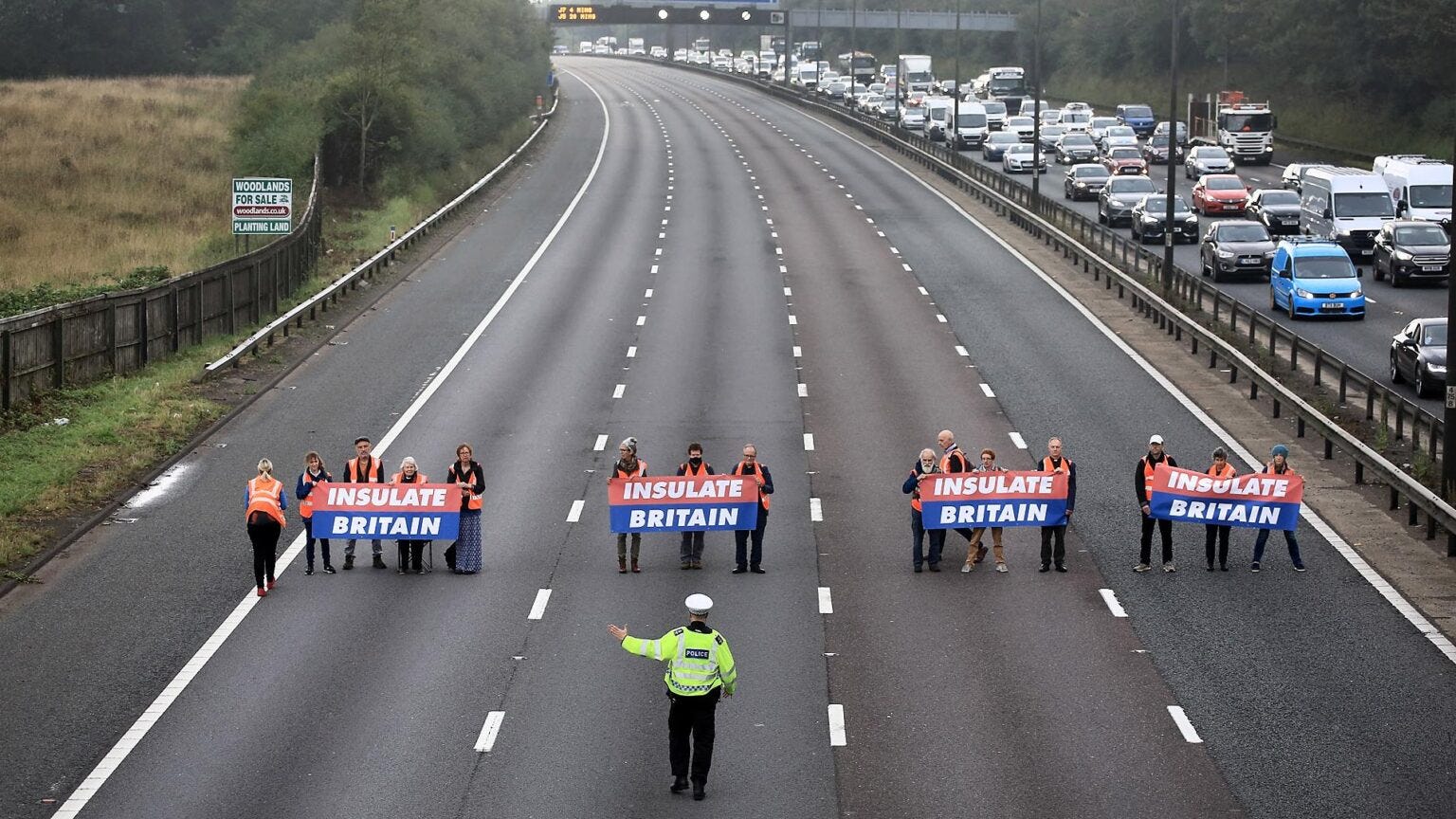
Some of the leading lights of the climate movement took to social media to say, basically, more of the same. More shouting, more civil disobedience, more gluing ourselves to the road and blocking traffic.
Others, though - like Rupert Read at Extinction Rebellion or Jonathan Guy and Sam Zacher at the Sunrise movement in the US - weren’t so sure, arguing that while XR and Sunrise had achieved a lot, they were now hitting diminishing returns.
In particular, they argued, we needed to broaden the coalition of public support for climate action, on the basis that you can’t achieve a breakthrough with just the 13% of the population who are ‘progressive activists’. As George Marshall, founder of Climate Outreach, put it in his book, climate change is “far too large to be solved without a near-total commitment across society”.
Meanwhile, Professor Becky Willis - a leading expert on public engagement on climate change - was pointing out another key factor: that from here on out, climate policy would get steadily more local, touching on how we heat our homes, how we get to work, the food we eat, the landscapes around us. Already, furious rows were erupting in communities all over the country about measures like ‘low traffic neighbourhoods’, wind turbines, or solar farms. The risk of climate becoming the next front in the ‘culture war’ seemed increasingly real.
All of this sounded spot on to me. And one thing seemed especially clear: generating that ‘near-total commitment’ was going to need conversations. Lots of them.
Breaking the silence
At Larger Us (the org I run), we’d started thinking about the power of conversations as a campaign tool when we met Dave Fleischer, a legendary LGBT rights campaigner in LA. As part of their work to counter homophobia and transphobia, Dave and his team had invented a powerfully effective approach called ‘deep canvassing’, where activists engage opponents in conversations characterised by respect, listening, and open-ended questions. We asked Dave if anyone had ever tried deep canvassing on climate. Not as far as he was aware, he replied.
We’d also come across a stat that remains etched on our minds to this day: that 57% of us in the UK (67% in the US) talk about climate change “infrequently, rarely, or never”.
At first, we were baffled. This is the granddaddy of global challenges. Why would we not be talking about it?
And then we stopped to think about it - and realised it rang completely true. Because all of us worry that if we raise climate change in conversation, then people will think we’re being preachy, or judgmental, or a downer, or hypocritical because we’re not environmentally perfect - or that we’re just not expert enough to counter climate sceptics going on at us about sunspots.
All this made us start to think a lot about how to break the silence on climate. The result: we designed a training called Let’s Talk Climate to give people the confidence, motivation and skills to have hopeful, positive conversations about climate with people who see the issue totally differently, or may simply not have thought about it that much.
Do conversations really move the political needle?
Now it’s five years later - and so much has happened! We’ve run Let’s Talk Climate with an amazing array of partners: a trade union, a university, a business coalition, and so many different campaigning orgs - from massive national membership charities like the Women’s Institute, National Trust and Wildlife Trusts all the way through to local organising groups everywhere from Devon to Northumberland.
It’s been an amazing experience, and we’ve learned loads. Some of the lessons we’ve absorbed along the way:
There is a lot of appetite for ways to get involved in climate action that don’t involve gluing yourself to the road.
The training we designed absolutely does give people the confidence, motivation, and skills to have climate conversation.
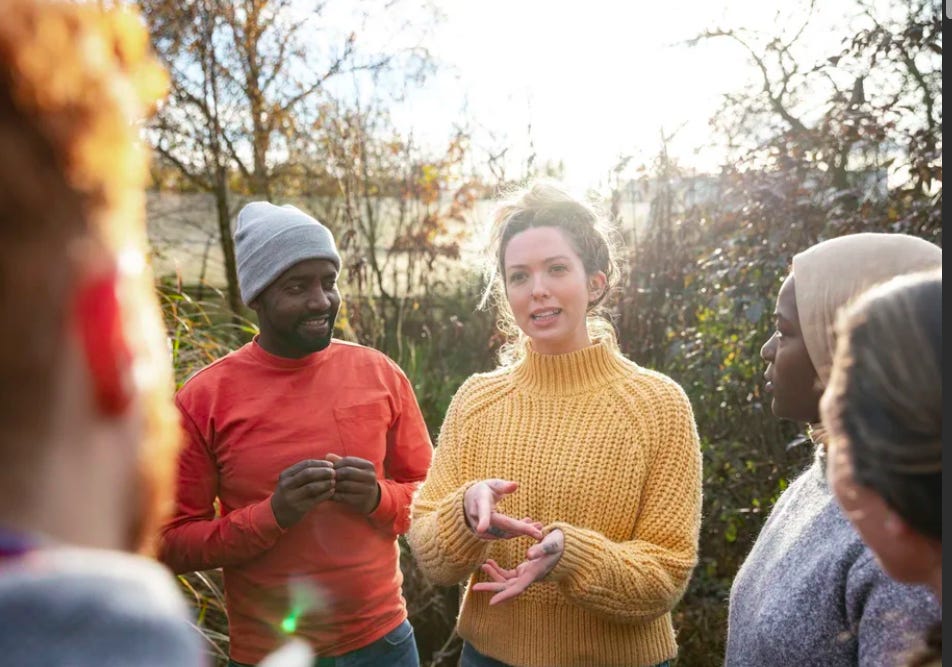
People adore being in small groups, like the ones that we invite them into for the 6-week ‘Challenge’ stage of the training where people set themselves conversation targets and debrief in their groups on how they’ve got on each week. Sometimes they feel a bit shy to start with. But by week 6 they’ve properly bonded, and I’ve now lost track of how many groups have told us they’ve decided to keep meeting after the end of the six weeks.
And they come back with completely hilarious and brilliant stories about what happened in their conversations (my personal favourite: the pub versus helicopter tale at the end of this blog post).
One question lingered in our minds.
We knew people valued the training. We knew they actually went on to have conversations (lots of them). But did those conversations actually move the political needle - and if so, how?
That’s the question that we asked Luisa Melloh, a leading researcher on public engagement on climate change, to help us find out. Today, we’re publishing her report. (We’re very excited about it.) These are my take-aways.
What we learned
First up the headline: the evidence is clear that conversations, held skilfully, are an incredibly powerful campaign tool - and one that has been overlooked by too many people for far too long. (I think of them as like discovering a cheat code for a video game.)
But it’s especially interesting to see exactly where and when they have most impact. At the start of this work, I thought we’d find that conversations have a massive impact on how we vote at election time, and on issue salience (how important we think different issues are).
The picture is more nuanced than I expected. As Luisa puts it, “When it comes to influencing vote choice at the national level the best estimate for the effect of conversations is likely zero”. And while the evidence for impact on issue salience is more promising, we still don’t have enough evidence to say for sure.
Where the evidence is clear that conversations have a massive impact, though, is on our attitudes, norms, and values. High quality conversations have reduced prejudice towards transgender people and undocumented migrants. Lowered Islamophobia. Increased support for prison reform in the US. Led to higher belief in the scientific consensus on climate change. And so on and so on. Our values, after all, are social constructs; things that we form together. And conversations are where that process takes place.
The magic ingredients
So what exactly do we mean when we say that conversations work if they’re “held skilfully” or are “high quality”? This is the bit of Luisa’s report I found most fascinating of all - because it turns out that the best, most impactful kinds of conversations tend to share six magic ingredients. Here they are:
Non-judgemental raising of an issue: being asked non-leading, open questions about how we came to hold our views gives us space to critically reflect on them.
High-quality listening: really being listened to helps us to feel psychologically safe and lower our guard, thus inviting more self-reflection and openness to changing our mind.
Consensus-building and finding common ground: focusing on shared views or experiences helps to build trust, and can lead to us becoming more aligned in our thinking.
Values alignment: listening out for markers of other people’s values and framing our message in line with those values makes conversations more persuasive.
Opportunity to exchange views, storytelling and perspective-getting: exchanging experiences and engaging with new perspectives through stories can powerfully change our attitudes towards those we perceive as ‘not like us’.
Efficacy-building and commitment-making: conversations that include discussing concrete options for action and making commitments to act are more likely to result in behaviour change.
When conversations combine these ingredients, a whole cluster of different psychological and social mechanisms get activated - both interpersonal factors (like intimacy, responsiveness, or shared norms) and intrapersonal ones (like self-insight, humility, or ambivalence). The effect is huge.
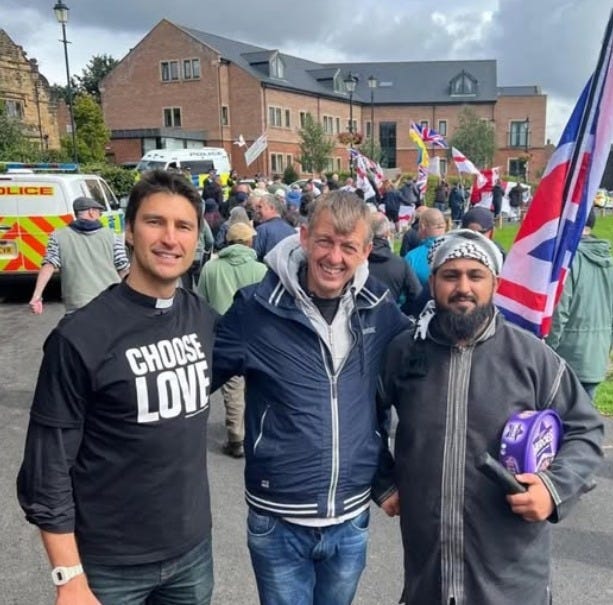
And when I read that list, I find myself nodding in recognition, because they’re the same traits that the bridge-building pioneers we meet at Larger Us so often emphasise, over and over again. People like Dave Fleischer. Or Heston Groenewald, the vicar I wrote about last year who started a mini-movement of people using cake to start conversations with people protesting outside hotels housing asylum seekers.
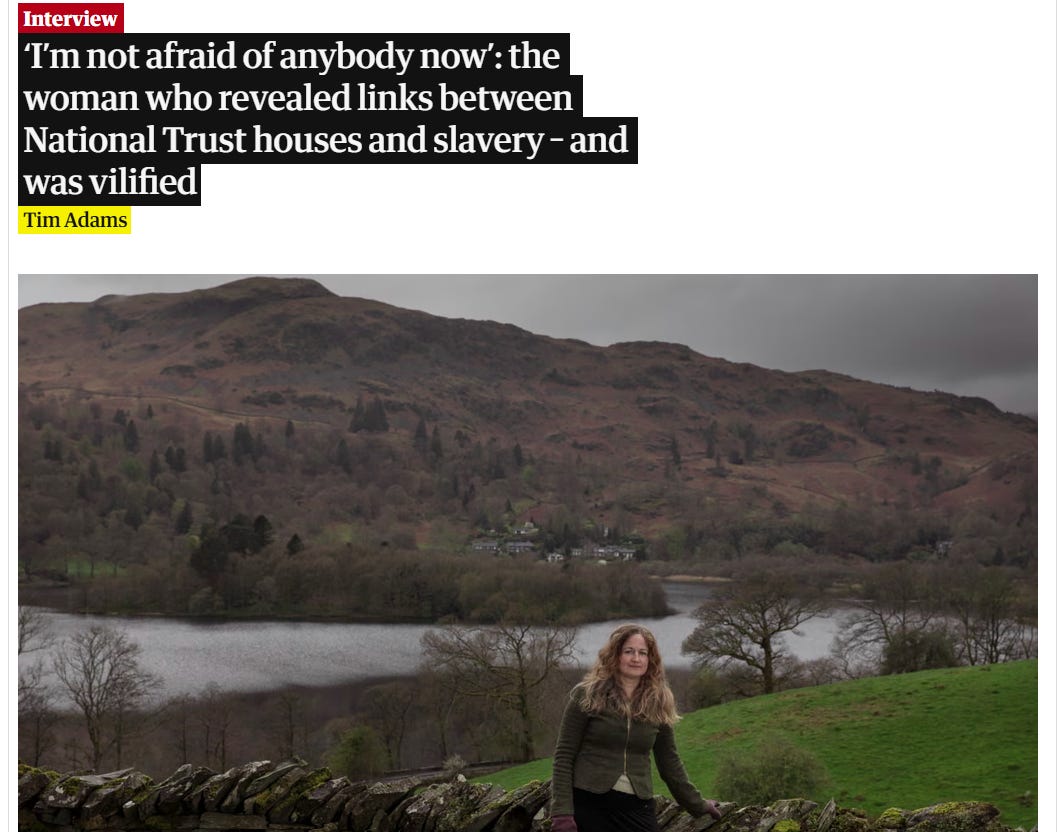
Or Corinne Fowler, the historian who became a target for ‘anti-woke’ journalists and politicians due to her work exploring the colonial histories of National Trust properties - and engaged positively with her attackers, with amazing effects.
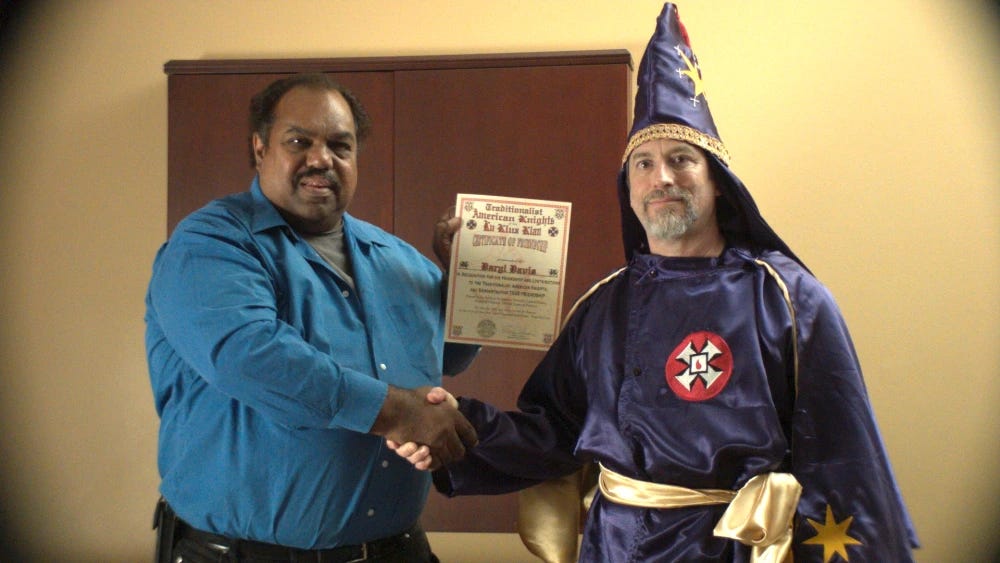
Or Daryl Davis, the African-American blues musician who has prompted more than 200 people to leave the KKK, whom I wrote about in my last post.
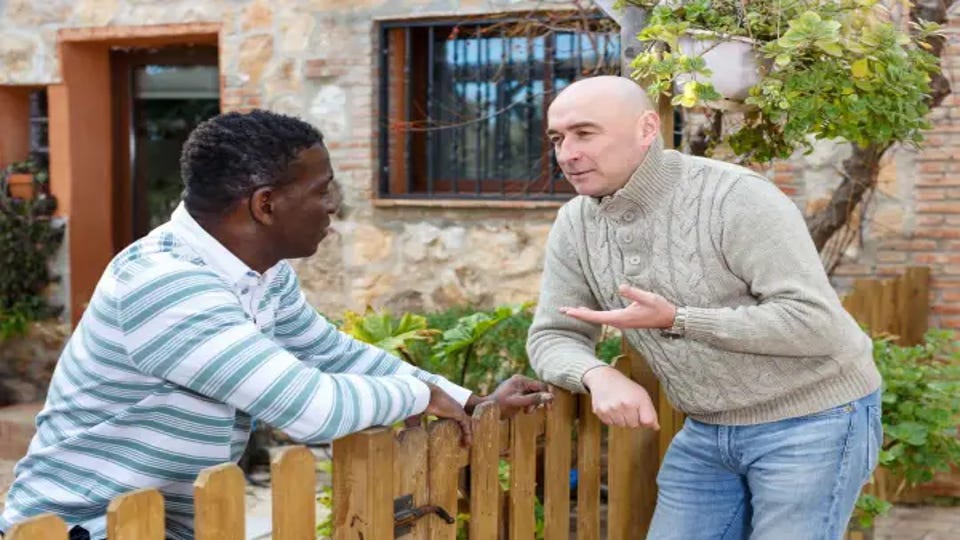
Conversations can seem like such small, everyday things - and in one sense they are, whether we’re having them at the school gate, on the dog walk, over the garden fence, or next to the office water cooler.
But every time we have them, we’re also engaging in a collaborative redrawing of our shared reality, with ripple effects we may well not be aware of.
Being able to do them well - in a way that recognises the deep truth of Amanda Ripley’s words that “people need to feel heard before they will listen” - is ground zero for building a brighter future. So let’s get talking.
Links I liked
You can read Luisa’s report here.
Our Let’s Talk Climate project now has its own website! Check it out here.
Shout out too to our friends at Climate Majority Project, the org that Rupert Read went on to found after writing the article linked to above. Check them out, they’re great.
You work for a funder, you say? We would love to have a chat with you about the new project we’re planning on curious conversations. Drop us a line!